Key points
Pruning can help to
- Guide the formative growth of a young tree
- Remove deadwood or branches that pose a risk
- Adapt the crown to the constraints of its surroundings
- Keep the tree to a size and shape that suit how the site is used
Pruning a tree is never a trivial act. Every cut is a wound and must serve a clearly defined objective.
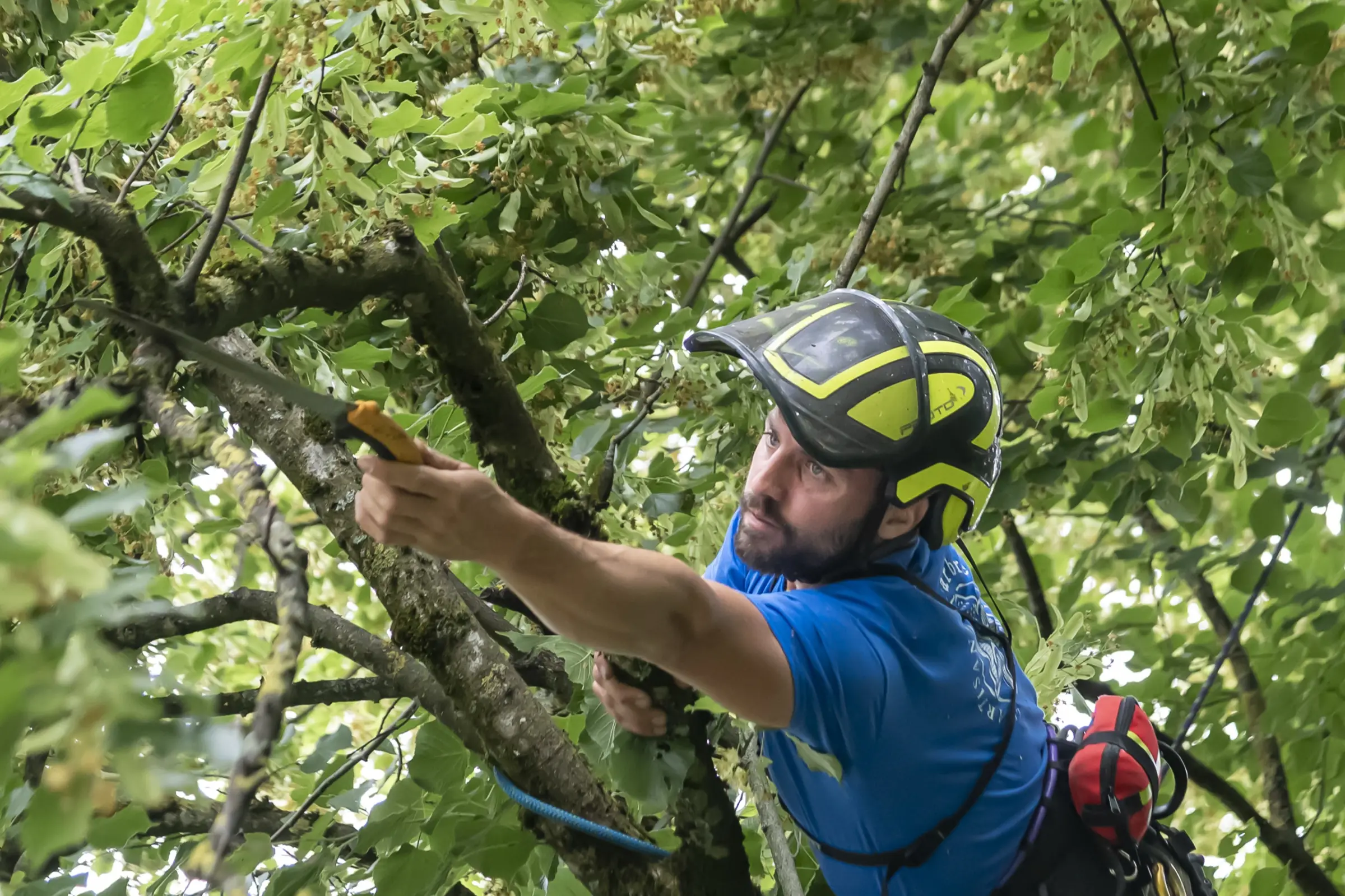
We favour measured, sympathetic pruning, tailored to the species, stage of development, architecture and physiological condition of the tree. Pruning can, for example, guide the formative growth of a young tree, remove deadwood or branches that pose a risk, adapt the crown to the constraints of its surroundings or keep the tree to a size and shape that suit how the site is used.
The essentials