

01 — Our consultancy
Clear information to help you decide
Les Artisans de l’Arbre carry out tree assessments, diagnoses, inventories and management plans for public authorities, private owners, property management agencies, businesses and site managers.
Our approach combines fieldwork, the consultant’s experience and recognised arboricultural methods. The aim is to provide clear, well-reasoned information so that the most appropriate decisions can be made, striking the best balance between retaining trees, safety, the way the site is used and keeping interventions under control.
02 — Arboricultural expertise and diagnosis
Understanding the tree before deciding
An arboricultural assessment establishes a diagnosis of a tree’s condition and, where necessary, evaluates the risk it may pose to its surroundings.
The examination covers, in particular, the tree’s physiological condition and health, its architecture, its mechanical behaviour and any defects or damage, as well as its surroundings and the targets that could be affected should it fail.
This analysis can address a wide range of situations: a tree with a cavity or damage, the appearance of wood-decay fungi, dieback, a suspected mechanical defect, the effects of nearby works, a notable tree to be preserved, or simply the need to know a tree’s condition before making a decision.
03 — Method
From observation to advanced investigations
Every assessment starts with the tree itself.
Visual observation, examining the tree’s architecture, vitality and surroundings, and looking for defects form the first stage of the diagnosis. In many cases, this analysis is enough to make recommendations.
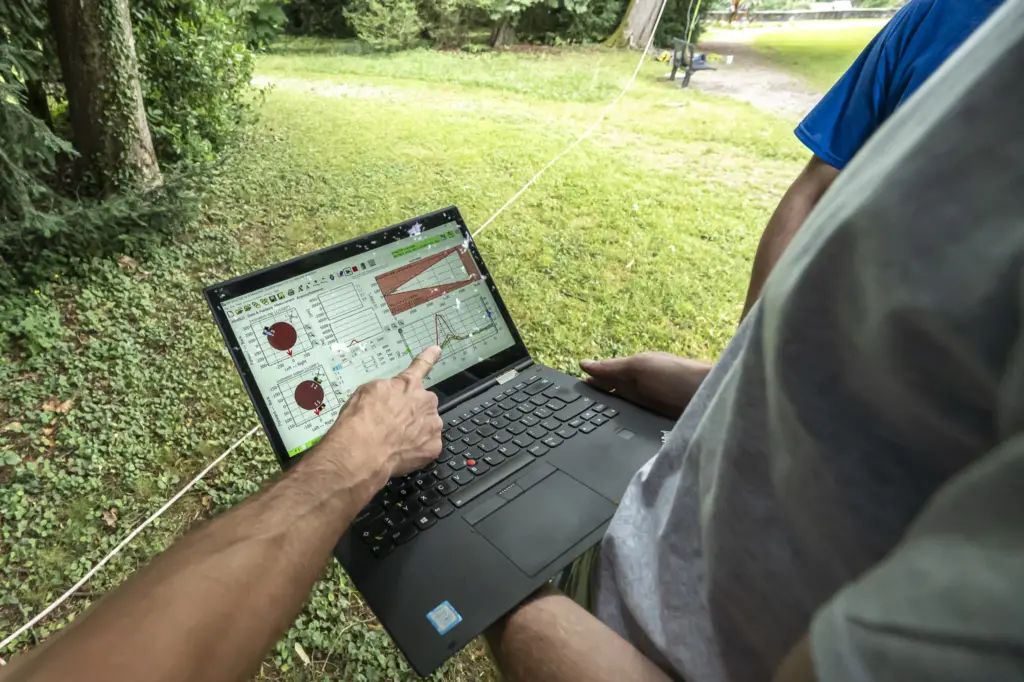
Where uncertainties remain, further investigations can be carried out to characterise a defect more precisely or to assess its consequences for the tree’s stability.
The choice of tool is never automatic: it depends on the defect observed and the information needed. Wherever possible, we favour the methods that are least invasive for the tree.
Depending on the situation, our consultants may use
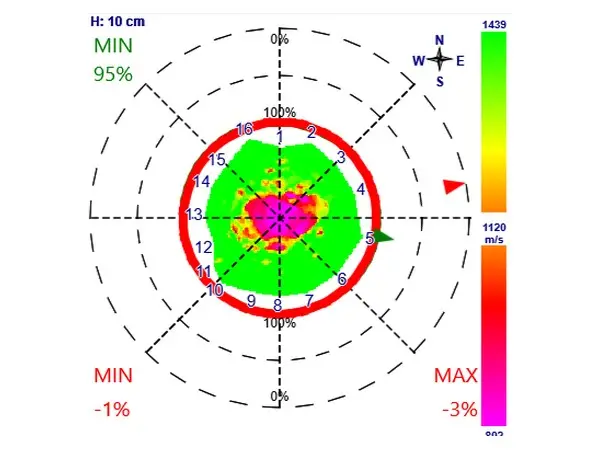
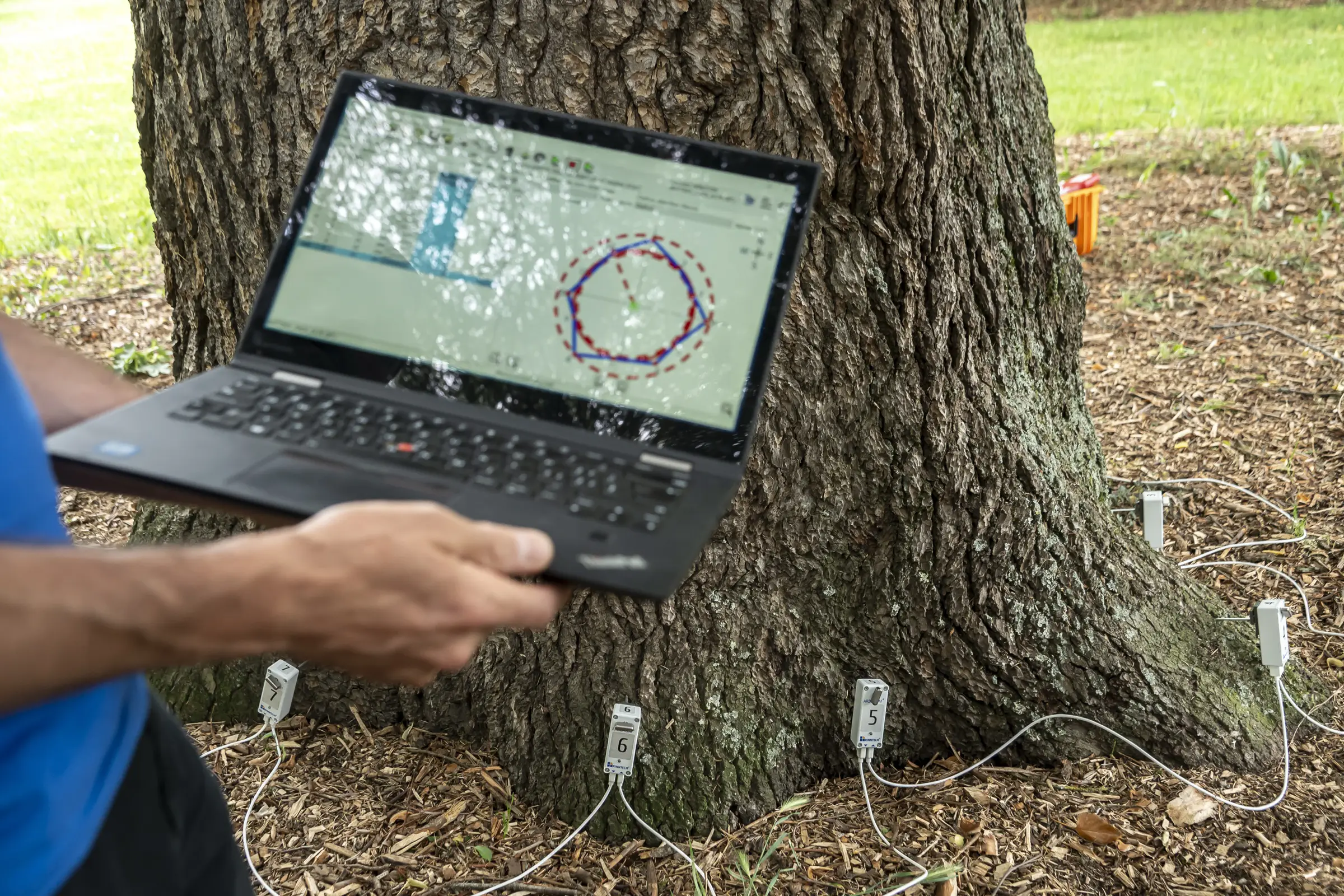
Sonic tomography
Non-invasive imaging of the trunk’s internal structure.
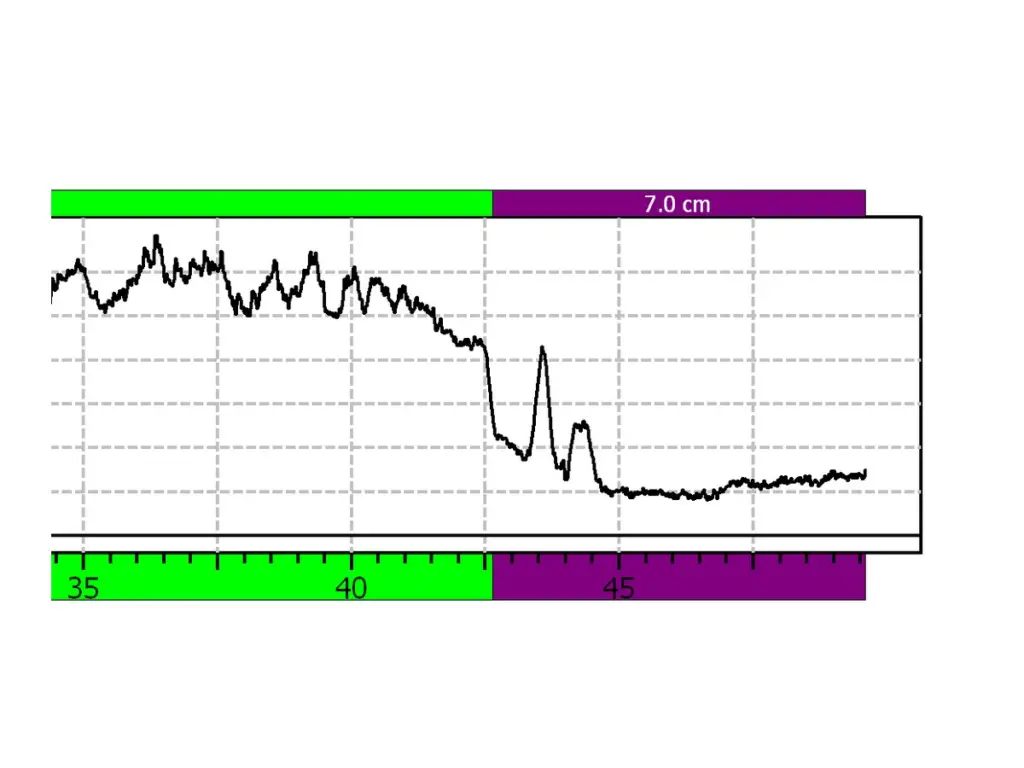
Resistograph
Measurement of the wood’s resistance to drilling to detect any internal decay.
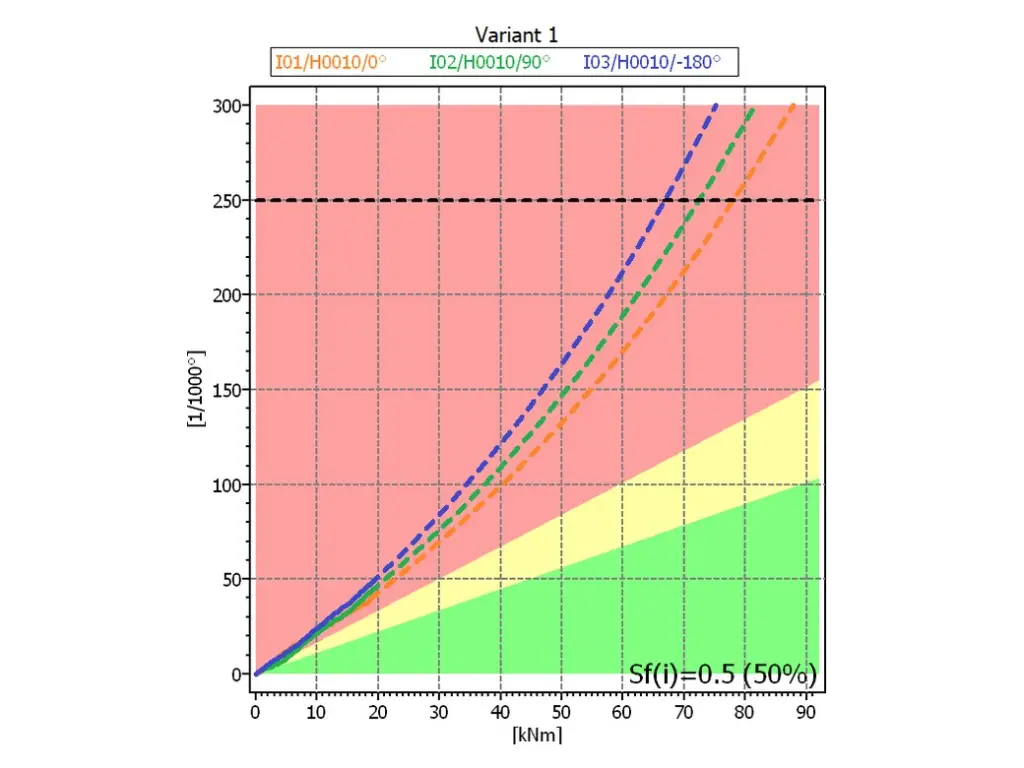
Pulling tests
Assessment of the tree’s stability and the strength of its root anchorage.
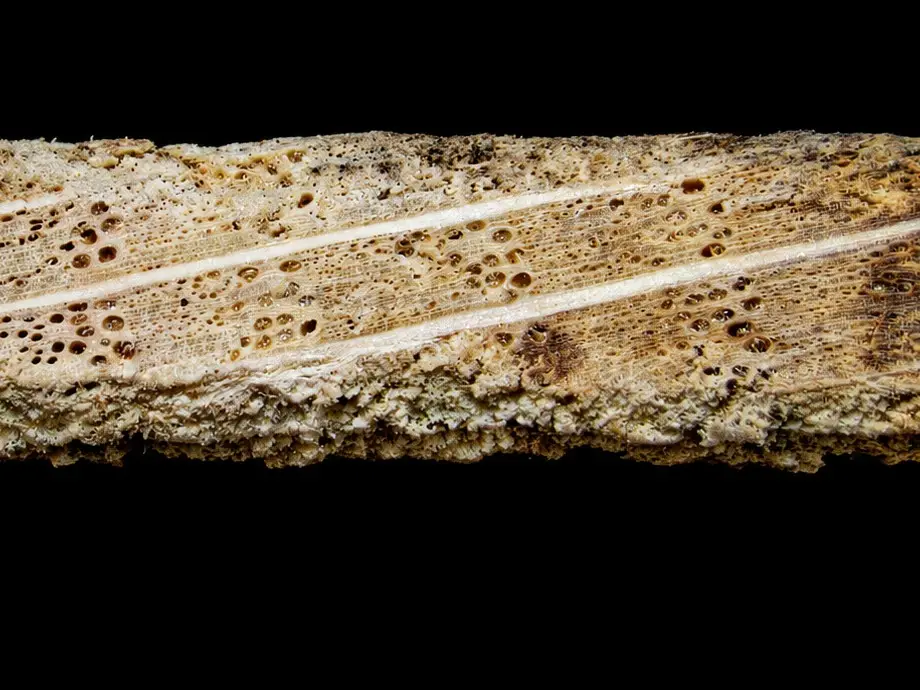
Core sampling
Analysis of the growth rings to date significant events in the tree’s life.
The key point
Instruments complement the diagnosis; they never replace observation, analysis or the experience of the expert.
04 — Recommendations
Recommendations tailored to each tree
The aim of an assessment is not simply to identify a defect, but to understand its implications and determine the most appropriate response.
Depending on the results of the diagnosis, we may recommend:
- Retaining the tree without intervention
- Setting up monitoring
- Carrying out tree care or targeted pruning
- Installing a support system
- Carrying out further investigations
- Felling the tree, when the level of risk no longer reasonably allows it to be retained
Whenever the situation allows, our priority remains to find a solution that is compatible with retaining the tree.
05 — Tree inventories & management
Know your trees to manage them better
Managing a tree stock starts with detailed knowledge of the individual trees within it.
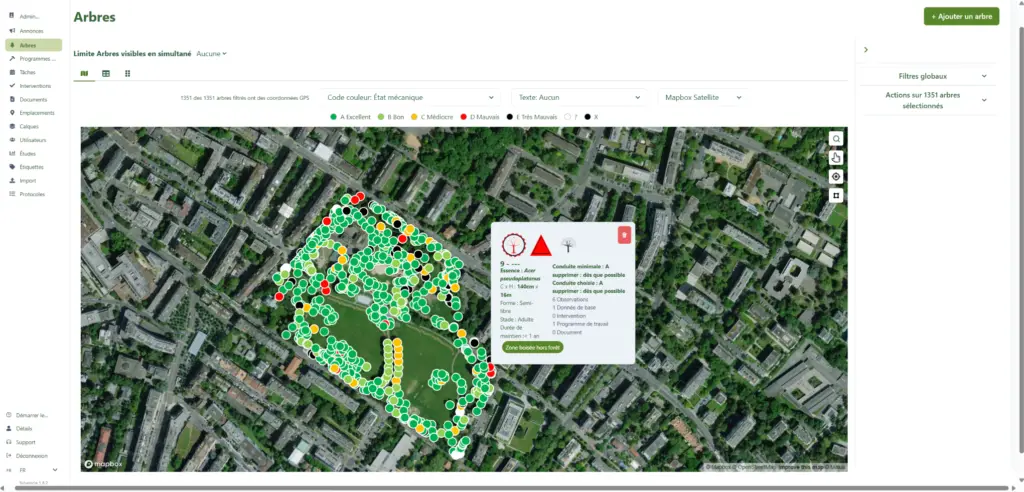
An inventory records, locates and describes each tree, while also giving an overall picture of the tree stock: species composition, age classes, physiological and mechanical condition, work required and changes over time.
Whether it covers a few dozen trees or several thousand, this information forms the basis of consistent, sustainable management.
From inventory to management plan
An inventory realises its full value when it becomes a genuine management tool.
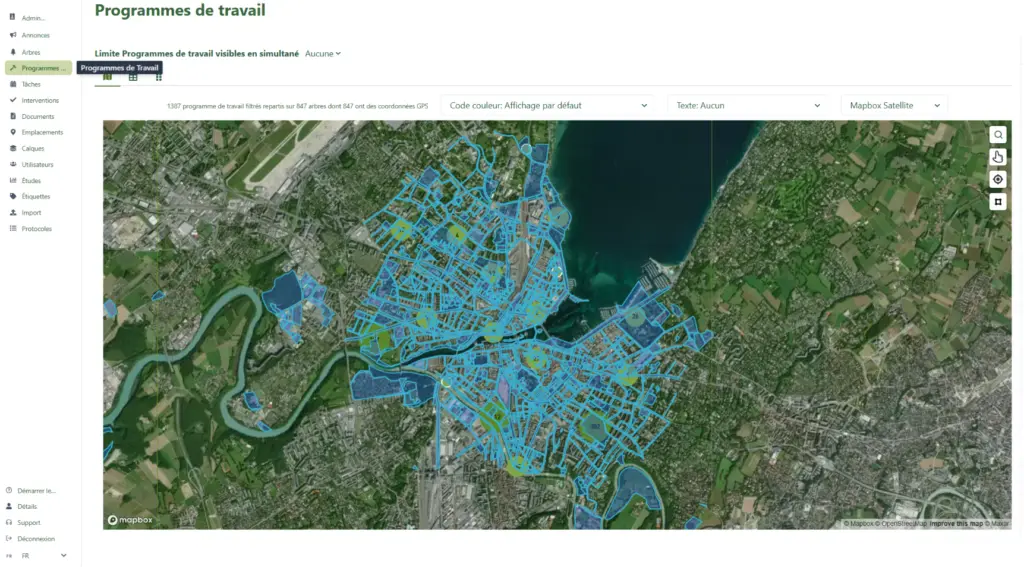
Based on our field observations, we can define and prioritise the work required: inspections, pruning, tree care, further investigations, safety work, felling or replanting.
Scheduling this work over time allows the manager to anticipate needs, set priorities and plan budgets, rather than acting only in emergencies.
Regular monitoring also keeps a record of each tree’s history and shows how the tree stock changes over the years.
Digital management of your trees
To support this approach, we use Sylvencia©, a digital platform dedicated to the inventory, diagnosis and management of tree stocks.
Each tree can be mapped and given its own record, bringing together its characteristics, its condition, the consultant’s observations, related documents and the history of work carried out on it.
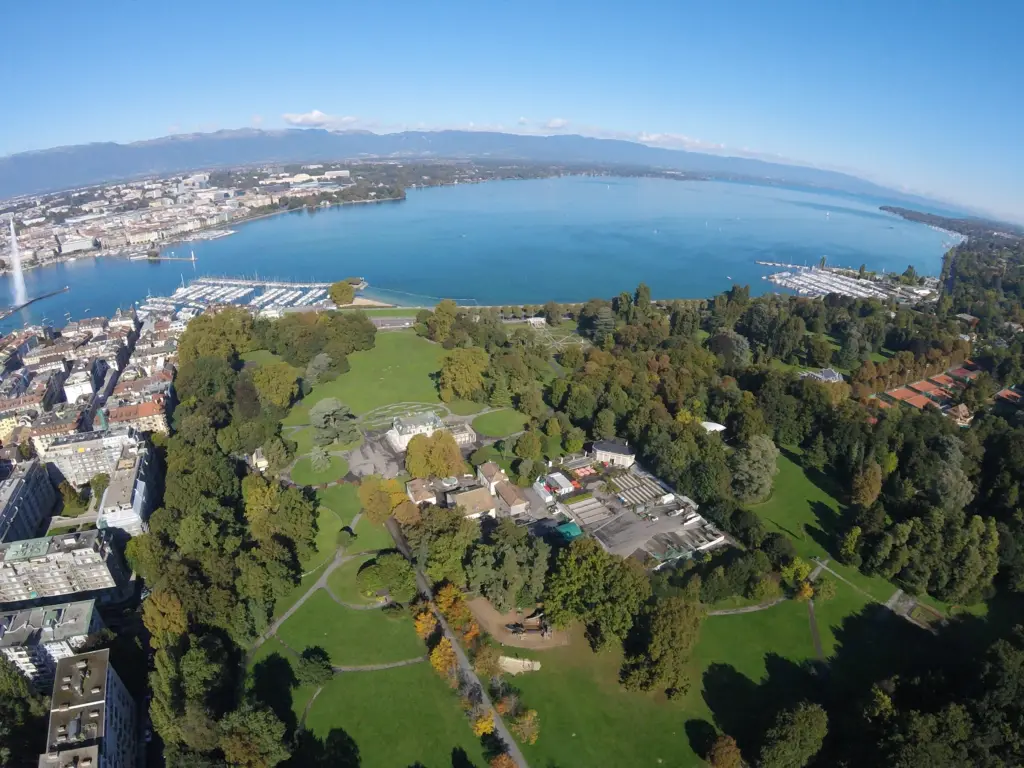
Across a park, a municipality or a group of sites, this information gives a clear picture of the tree stock and makes it possible to schedule, monitor and document work over time.
The digital tool is, however, only a support: the quality of an inventory and a management plan depends above all on the relevance of the observations made in the field and on their interpretation by experienced professionals.

Knowing your trees, following how they develop and stepping in at the right time: sustainable tree management starts with a reliable diagnosis.
06 — Consulting arborist
Protecting trees on construction sites
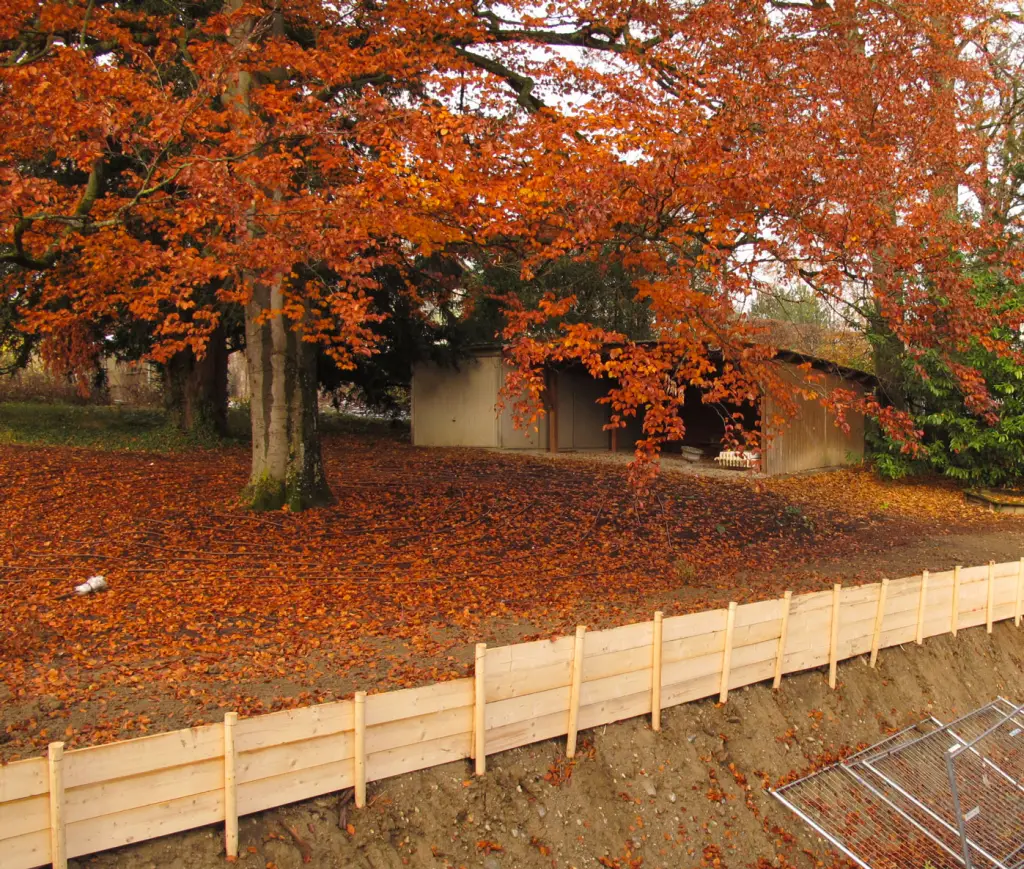
Building on, converting or landscaping a site with trees means taking the existing trees into account from the very first stages of the project.
Arboricultural impact assessments, pre-construction specifications, arboricultural site supervision during and after the works: we support project owners, designers and contractors.
When should a tree be assessed?
An arboricultural assessment is recommended when a tree shows signs of decline, cavities, wood-decay fungi or mechanical defects that could compromise its stability. It may also be needed after works nearby, to assess the condition of a notable tree, or simply to anticipate how a tree will develop and make informed decisions about its retention and management.
Does an assessment damage the tree?
In most cases, visual observation is enough to establish a diagnosis and make recommendations. Where further investigations are needed, we favour non-invasive or minimally invasive techniques, preserving the integrity of the tree while obtaining the information required to assess it.
What is a management plan for?
Based on an inventory and a diagnosis, a management plan sets out a long-term strategy for retaining, making safe and renewing the trees in your care. It is used to prioritise and schedule work and inspections, anticipate needs and plan budgets. Updated regularly, it keeps pace with how your trees change over time, as part of a sustainable, well-considered approach to management.
What size of tree stock do you take on for an inventory?
We carry out tree inventories of all sizes, from a few dozen trees to several thousand, for parks, private estates, municipalities and groups of sites. Our approach is adapted to the extent of the tree stock, the manager’s objectives and the level of detail required.