
01 — What we do
Understanding the tree comes first
Our work rests above all on knowing the tree: understanding how it functions, its architecture, its growth and its ability to adapt, so that every intervention is appropriate and proportionate.
Every tree is a living organism, with its own history, surroundings and constraints. There is no one-size-fits-all answer: every intervention must meet a genuine need and a clearly defined objective.
02 — From planting to the end of life
Caring for the tree throughout its life
From planting through to the end of a tree’s life, our arborists work to support its development, preserve its health and help it coexist with its surroundings.
Planting, sympathetic pruning (what most people simply call “tree trimming”), root care, soil improvement, cabling and bracing, tree protection, and felling and dismantling when a tree can no longer be retained: each intervention is chosen according to the tree’s condition, its stage of development and the setting in which it grows.
We always favour a measured approach. A healthy tree does not necessarily need pruning. When pruning is needed, it must have a clear objective and respect, as far as possible, the tree’s natural architecture and its ability to respond.
03 — In the city and in the garden
Balancing trees, site use and safety
In cities and gardens alike, trees have to contend with many constraints: buildings, roads, underground utilities, public access, building works, lack of space or altered soils.
Our job is to find the best balance between keeping the tree, the safety of people and property, and the way the site is used.
From small private gardens to extensive tree stocks, we put our experience at the service of trees and of those responsible for them.
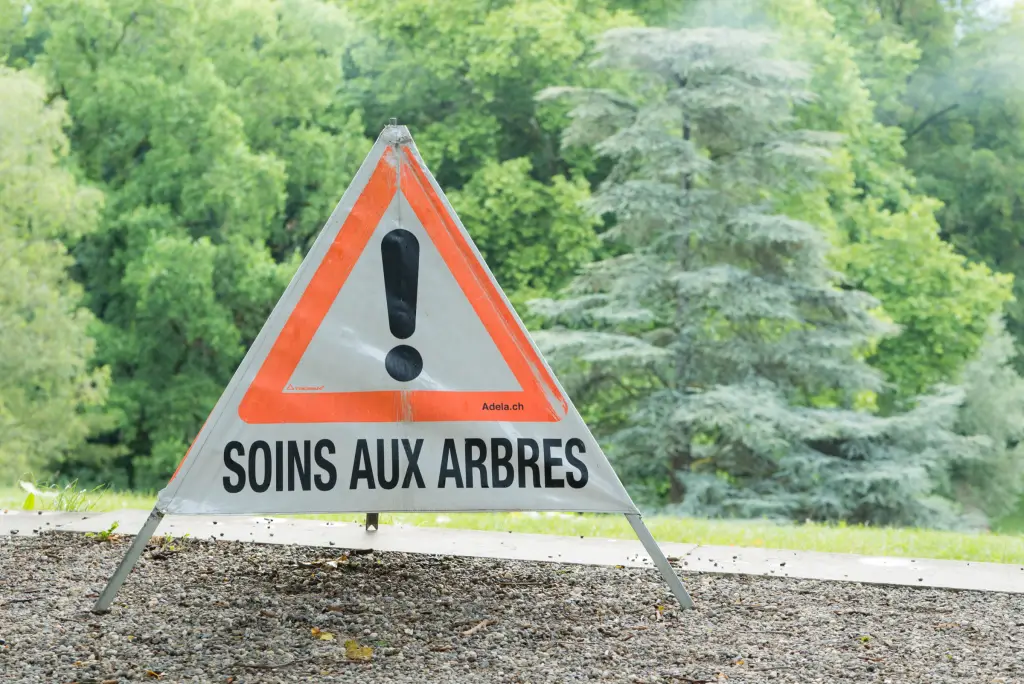
04 — Knowledge and experience
Arboriculture grounded in knowledge
Our practices draw on current knowledge of tree biology, physiology, architecture and biomechanics, and on the experience we gain every day in the field.
Observe before acting, understand before intervening and preserve whenever possible: this approach has guided the work of Les Artisans de l’Arbre for 25 years.
Intervening only when necessary, with the right technique and with respect for the tree.
05 — Our services
Our tree care services
Six areas of work, from planting to felling: each service is chosen according to the tree’s condition and the goal in view.
-
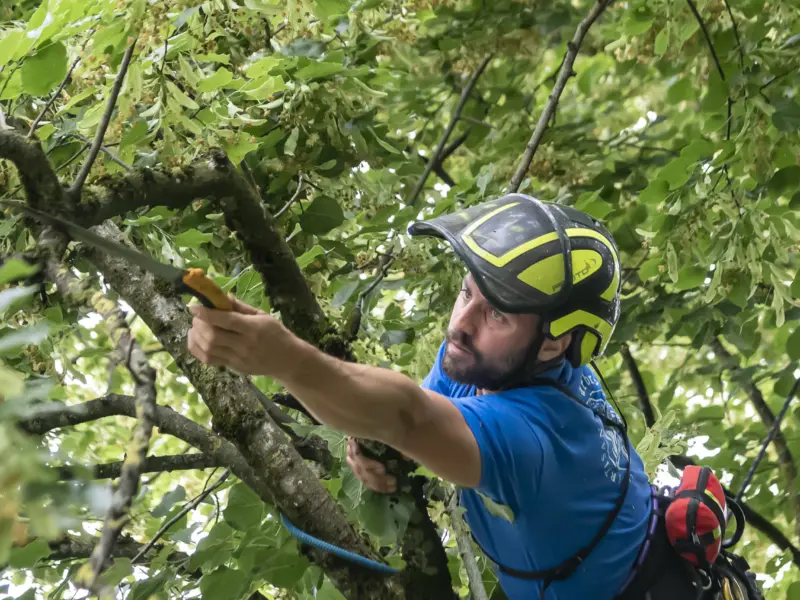
Tree pruning
Every cut is a wound: we prune only when a clear objective justifies it, with the minimum intervention necessary.
Learn more -
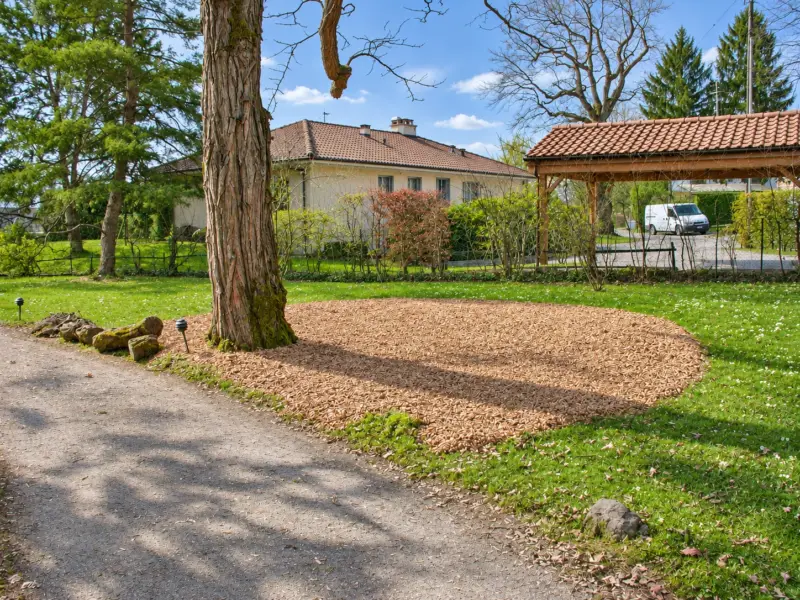
Root care & soil improvement
Improving soil structure and soil life to restore conditions in which roots can thrive.
Learn more -
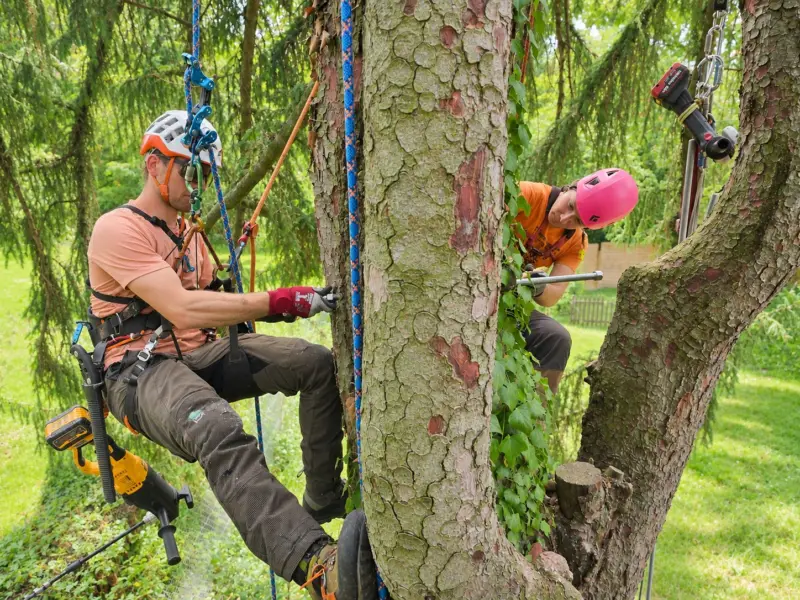
Tree cabling & bracing
Securing a weakness in the crown with dynamic or static cables, balancing safety with keeping the tree.
Learn more -
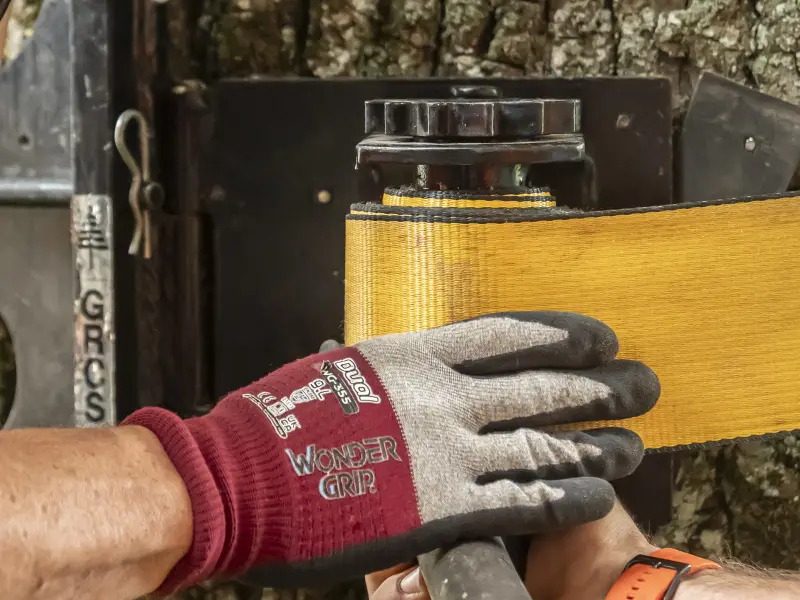
Tree felling & dismantling
When a tree can no longer be kept: direct felling or sectional dismantling with rigging, protecting people and buildings.
Learn more -
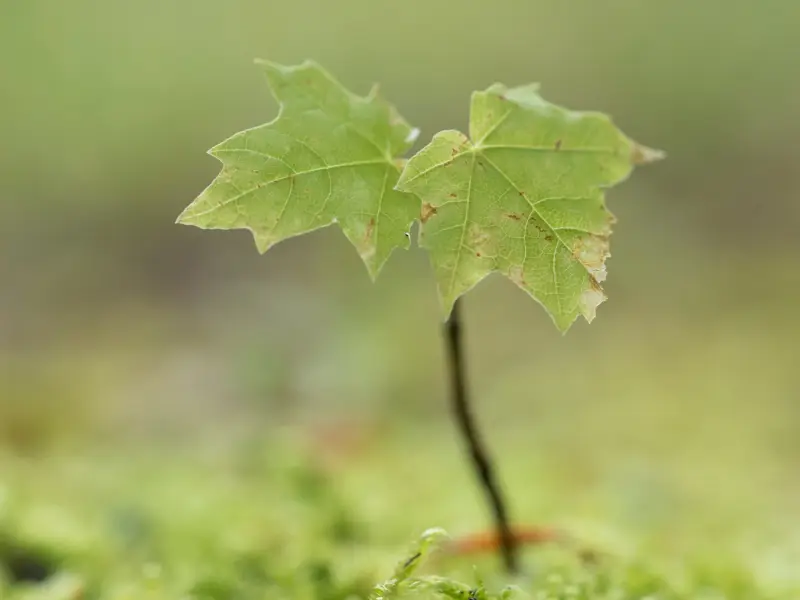
Tree planting
The right tree in the right place: species selection, quality nursery stock, soil preparation and aftercare for young trees.
Learn more -
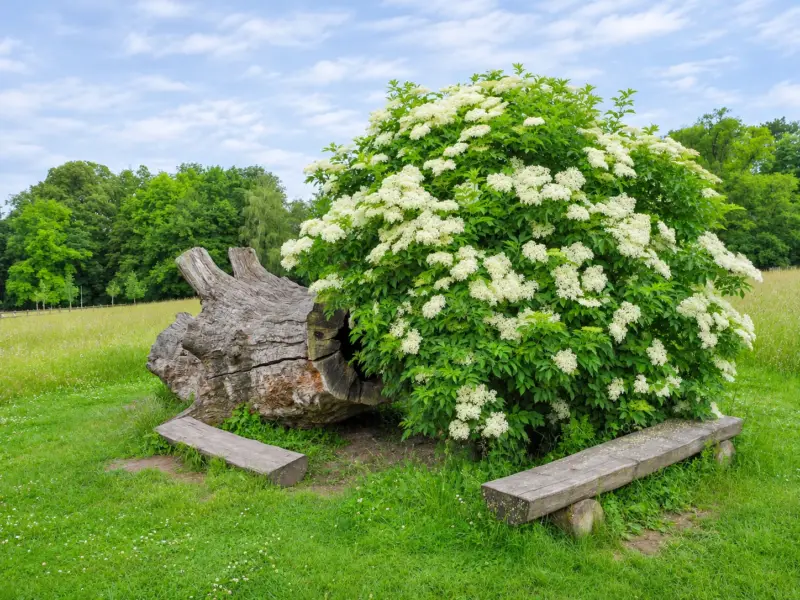
Trees & biodiversity
Deadwood, cavities, mulch and wildlife shelters: we protect all the life that depends on trees.
Learn more
When should a tree be pruned?
Only when there is a clear reason for it: guiding the structure of a young tree (formative pruning), removing deadwood or branches that pose a risk, adapting the crown to the constraints around it, or keeping the tree to a size compatible with how the site is used. A healthy tree does not necessarily need pruning.
What should I do if a branch on my tree looks weak?
Some structural weaknesses can be made safe without removing the branches concerned. After a tree diagnosis, installing dynamic or static cables can limit movement or reduce the consequences of a possible failure.
How can I improve the health of a declining tree?
A tree’s health depends closely on the quality of its soil. After analysis, we use techniques designed to improve soil structure, boost its biological activity and restore conditions that favour root development.
Can a tree be felled in a confined space?
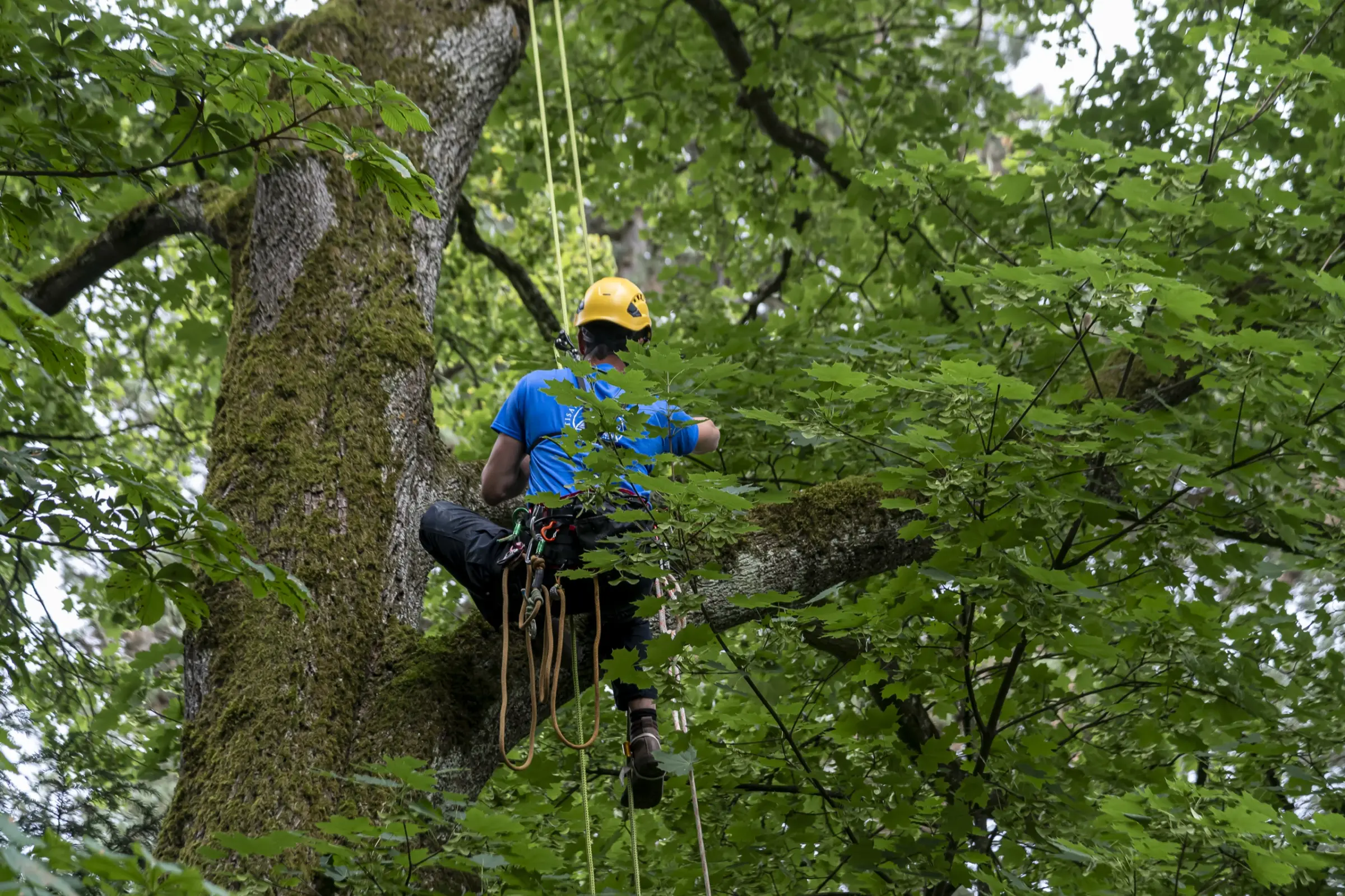
Yes. In tight spaces, we dismantle the tree in sections, gradually removing the crown and then the trunk. Climbing and rigging techniques let us control the lowering of each section and protect people, buildings and landscaping.